
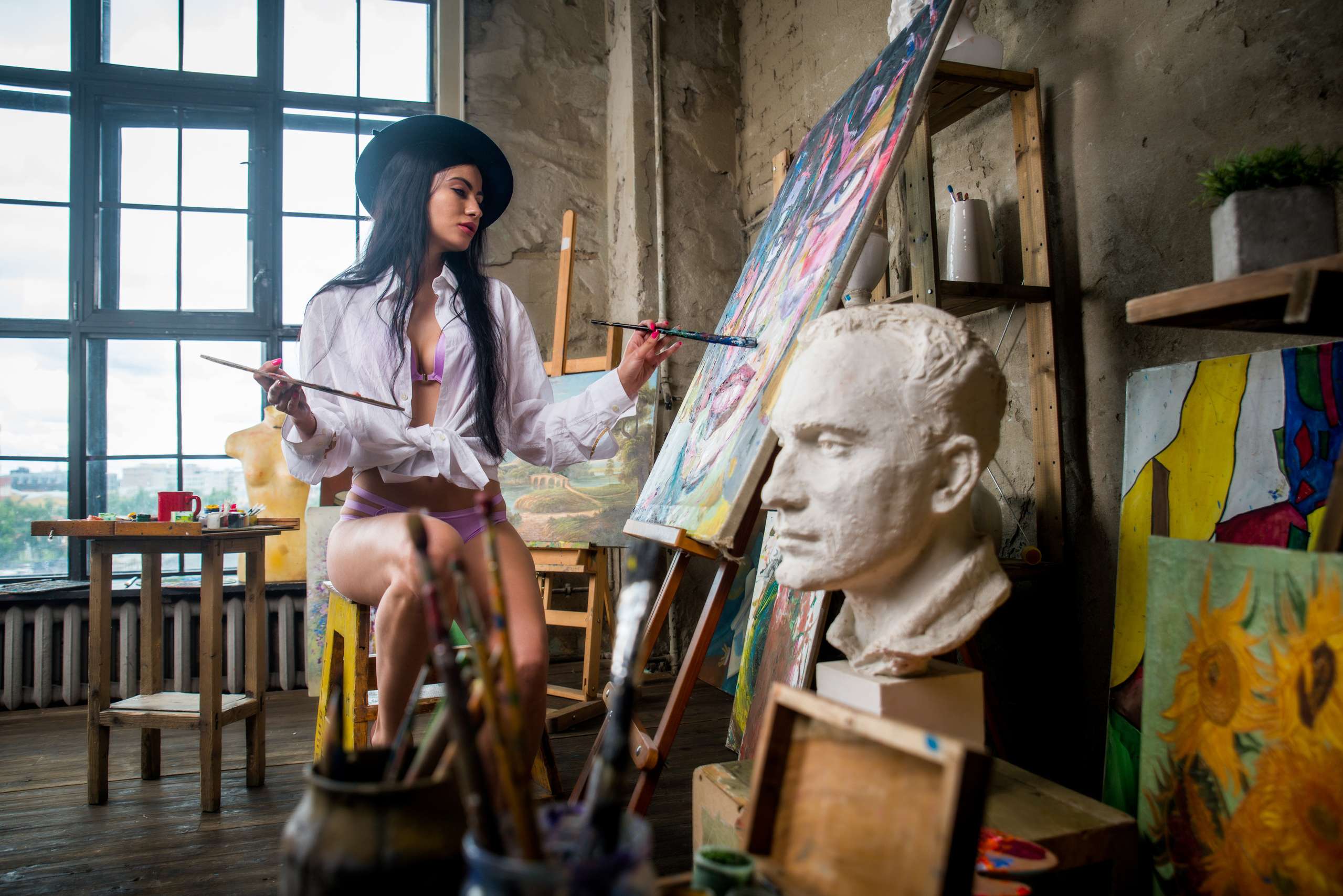
The Transformative Power in Learning the Art of Color
Color One of the most basic forms of visual art, color can evoke feeling, direct attention, and lend harmony to a work. Learning to work with color doesn’t mean memorizing a bunch of palettes or copying from life, it means learning how colors work in practice-ho where they interact, complement, and contrast to create significant effects. Color for the artists that understand it, can take a seemingly mundane scene and turn it into a compelling story, conjuring up emotions and reactions that play on levels far deeper than what appears to be painted or photographed.
Developing understanding of color involves several layers, both intellectual and hands-on. Typically, beginners begin with basic color concepts such as primary, secondary, and tertiary colors when they study these concepts, but true mastery is found by delving into hue, saturation and value. Playing with warm and cool tones, learning complementary to analogous juxtapositions of color and how that affects one another, study nature’s light and shadow etc helps the artist look at color and use it more intelligently. With time, these techniques will create a perceptual sensitivity that guides all creative decisions.
In reality, working with color is a matter of confidence and control. It’s all part of the learning process as we learn how different colors act differently in various situations. Artists who accept error as part of the process acquire an elastic mindset, being taught how to amend compositions and moods at a moment’s notice. Similarly, this iterative process promotes creativity and problem solving for learners redefining each stroke as an opportunity rather than the prospect of failure.
Color is as well a mediator between skill and the emotion. Artists speak to viewers in subtle, but impactful ways by a calculated use of color to express mood, focus on specific areas of interest or deliver symbolism. Thanks to this capacity for the control of perception using colour, you attain an experience that contrasts with the first, and one that is only possible through intelligence and imagination; very rarely does practical art catch up with such vivid reality. Good use of color is one that seems to come naturally, but is learned over time through trial and error.
After all, learning to see color is a lifelong pursuit that expands an artist’s understanding of not only his medium but also his creative intuitions. Each experiment adds to the artist’s vocabulary, enabling them to map increasingly complex concepts visually. Let students focus on learning color and not only do they become more competent with their tools but also, as importantly, they learn to see how all those elements play off of each other to give that greater depth to their artwork which resonates across several dimensions.